A hybrid energy storage device combining the high energy density of lithium batteries with the high power density of supercapacitors. Supports microwatt-level intermittent charging, second-level fast charging, cycle life over one million cycles, and wide temperature operation — the ideal storage partner for micro-energy systems.
Covering cells, modules, and hybrid energy storage to meet diverse needs from microamp-level charging to amp-level pulse discharge
Based on activated carbon electric double-layer principle, sealed in aluminum can with rubber stopper. High power density and cycle life over 100,000 times, ideal for high-power pulse discharge.
Hybrid of electric double-layer capacitor and lithium-ion battery, balancing energy density and cycle life, supporting microamp-level charging and fast discharge.
Multiple cells connected in series/parallel with built-in voltage balancing management, providing customized voltage and capacity solutions with free selection and design support.
Premium axial audio capacitors and import-replacement film capacitors for high-fidelity audio, power filtering, and other precision applications.
Lithium supercapacitors combine battery and capacitor advantages, available in lead-type, pouch-type, button-type and module formats
| Comparison | Lithium Supercapacitor | Supercapacitor (EDLC) | CR coin cell | Rechargeable Li battery |
|---|---|---|---|---|
| Energy density | 5-15 Wh/kg Balanced | 1-5 Wh/kg | High (single-use) | 100-265 Wh/kg |
| Power density | 2000+ W/kg | 10000+ W/kg | <0.1 W/kg | 250-350 W/kg |
| µA-level charging | Yes | Yes | No | Difficult |
| Cycle Life | 50F: ≥1M 100F: 8000+ |
100000+ | 0 (single-use) | 500-1000 |
| Leakage Current | 2-5 µA Ultra-low | 50~5000 µA(varies widely by capacitance & brand) | ~0.25 µA | 1.5~3 µA |
| Operating Temperature | -40~70°C | -40~85°C | -20~60°C | -20~60°C |
| Safety | High no explosion/no fire |
High | Medium | Medium |
Lithium supercapacitors achieve the best balance among energy density, power density, and cycle life, with leakage current as low as 2-5µA (72h measured, 1~2 orders of magnitude lower than EDLC at comparable capacitance), plus microamp-level charging support — the ideal choice for micro-energy scenarios
Data sources: LIC leakage from multiple manufacturers' 72h datasheet values; EDLC from industry datasheets; CR coin cell self-discharge ~1%/yr; Li-ion self-discharge ~3%/mo (LIR2032 typical)
A head-to-head of LIC against Li-ion, NiMH, EDLC and lead-acid — to see where the real differences lie
| Dimension | LIC This site | Li-ion battery | NiMH battery | EDLC | Lead-acid |
|---|---|---|---|---|---|
| Storage principle | Double-layer adsorption + Li-ion intercalation (asymmetric hybrid) | Electrochemical intercalation / de-intercalation (Faradaic) | Reversible hydrogen absorption in alloy | Pure double-layer physical adsorption | Lead / lead-dioxide + sulfuric acid |
| Positive electrode | Activated carbon (lithium pre-doped electrolyte) no lithium metal oxide |
Lithium metal oxide (LiCoO₂ / LiFePO₄ / NMC) | Nickel hydroxide Ni(OH)₂ | Activated carbon | Lead dioxide PbO₂ |
| Energy density | 5–15 Wh/kg | 100–265 Wh/kg | 60–120 Wh/kg | 1–5 Wh/kg | 30–50 Wh/kg |
| Power density | 2000+ W/kg | 250–350 W/kg | 250–1000 W/kg | 10000+ W/kg | <200 W/kg |
| Cycle life | 50F: ≥1M 100F: 8000+ |
500–1000 | 500–1000 | 100000+ | 200–500 |
| µA-level charging | Yes very low barrier | Difficult (CC-CV management) | Difficult | Yes | Difficult |
| Self-discharge / leakage | 2–5 µA (ultra-low) | ~3%/mo standby 1.5–3 µA |
15–30%/mo | 50–5000 µA (higher) | 3–5%/mo |
| Operating temp. | -40 ~ 70 °C | -20 ~ 60 °C | -20 ~ 50 °C | -40 ~ 85 °C | -20 ~ 50 °C |
| Thermal-runaway risk | No lithium metal oxide at positive; no free oxygen release; very low uncontrolled exotherm risk | Positive decomposes above 200°C releasing free oxygen; prone to chain reaction | Relatively mild; hydrogen venting at high temp | Physical storage; no thermal runaway | Gassing, non-chain |
| UN classification | UN 3508 asymmetric capacitor (Class 9) |
UN 3480 Li-ion battery (Class 9) |
UN 3496 battery (Class 9) |
UN 3499 EDLC (Class 9) |
UN 2794 / UN 2800 storage battery (Class 8) |
| Typical use | Energy harvesting, battery-free IoT, memory backup, pulse buffering | Primary power, portable devices | Consumer electronics, power tools | Power pulses, start-stop buffering | Starter power, storage base stations |
Note: values are typical ranges per category; refer to the specific cell datasheet. The defining point of LIC is its positive electrode contains no lithium metal oxide — the very reason UN TDG classifies it as a "capacitor" rather than a "battery" and applies more lenient transport provisions (see next section).
Per the UN Recommendations on the Transport of Dangerous Goods (TDG) and the latest IATA Dangerous Goods Regulations (DGR)
The UN Sub-Committee of Experts (proposal by Japanese experts, adopted 2011–2012) clearly distinguishes the three — the key is whether the positive and negative electrodes are made of the same material:
| Type | UN number | Electrode materials | Storage principle |
|---|---|---|---|
| EDLC | UN 3499 | Both electrodes same carbon (activated carbon) | Ion adsorption / desorption |
| LIC | UN 3508 | Positive activated carbon + negative Li-ion-intercalating carbon (different) → asymmetric capacitor | Double-layer + Li-ion intercalation hybrid |
| Li-ion battery | UN 3480 | Positive lithium metal oxide (LiCoO₂, LiMn₂O₄, etc.) | Electrochemical intercalation / de-intercalation |
Key safety difference: LIC's positive electrode contains no lithium metal oxide, so it does not, like a battery, thermally decompose above 200°C to release free oxygen and trigger an uncontrolled exothermic reaction. In the UN's own words:
"an uncontrolled exothermic reaction due to generation of free oxygen by decomposition of lithium metal oxides does not occur".
Energy formula: E = ½ × C × (V_max² − V_min²) ÷ 3600
Example: a 250F cell from Jinmei LIC (rated ~2.7 V, operating range 2.2 V ~ 3.8 V):
E = 0.5 × 250 × (3.8² − 2.2²) ÷ 3600 = 0.5 × 250 × 9.6 ÷ 3600 ≈ 0.33 Wh
This sits right around the 0.3 Wh threshold, giving two cases:
| Stored energy | Transport requirement |
|---|---|
| ≤ 0.3 Wh | Not regulated as dangerous goods (unrestricted) |
| > 0.3 Wh (250F, most likely) | UN 3508, Class 9; but most requirements can be waived if the following conditions are met |
Note: the above are general transport-compliance points for LIC as an "asymmetric capacitor (UN 3508)". Always ship per the latest UN TDG / IATA DGR / IMDG and the carrier's and destination country's requirements; for volume shipments, obtain the relevant test and compliance documents for the specific model.
Understanding the internal structure of these three energy storage devices helps you choose the right solution
Based on the electric double-layer capacitor principle, activated carbon serves as both positive and negative electrodes, separated by electrolyte and separator, sealed in an aluminum can with rubber stopper, achieving high-power, long-life physical energy storage.
Multiple cells connected in series and parallel with built-in voltage balancing management circuits, solving cell voltage inconsistency and improving system reliability and output capability.
A hybrid energy storage device combining an electric double-layer capacitor and lithium-ion battery internally, with electrodes separated by a separator, electrolyte filling the cell, and rubber stopper sealing the aluminum can, combining high energy density and fast charging.
When your product needs any of the following, supercapacitors or lithium supercapacitors are the best fit
USB high-power output, camera flashes, power tools, motor drives and other pulse discharge scenarios
Solar road studs, buried lights, smart water/electric/gas meters and other permanent installations
Security flashlights, electric toys, power tools, emergency equipment that need rapid energy recovery
Emergency lighting, float-charge systems, IoT terminals and industrial sensors with frequent charge/discharge cycles
Automotive and construction machinery cold starts, outdoor equipment, systems requiring energy retention down to -40°C
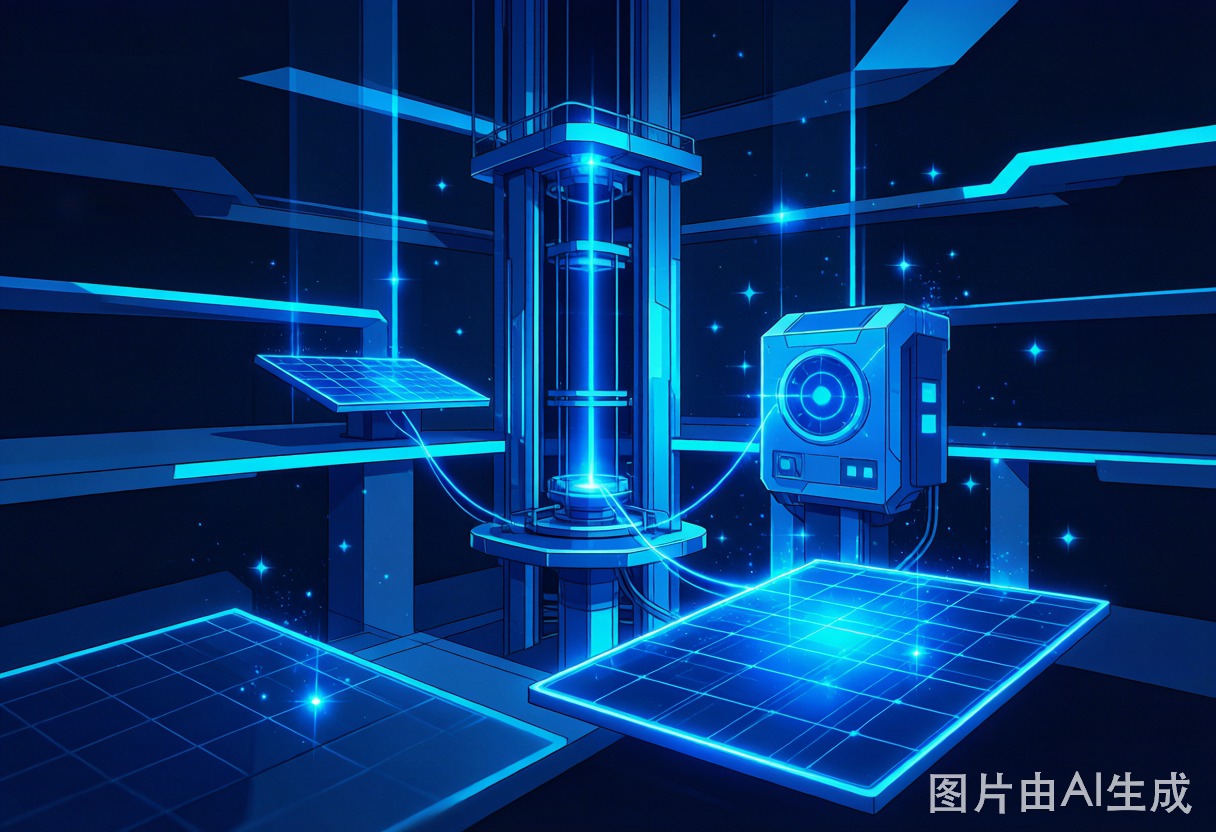
Standalone solar power, energy-saving elevators, eco-friendly vehicles, and storage systems with high safety requirements
Lithium supercapacitors have passed the full UN38.3 transport safety test, meeting air, sea, and land transport requirements
Test Report No.: TCT250925B019 | Date of Issue: 2025.09.27
In accordance with UN "Manual of Tests and Criteria" ST/SG/AC.10/11/Rev.8 Subsection 38.3
We provide free selection and design advice for supercapacitor cells and modules, recommending the most suitable specifications based on your power, environment, and cost targets
Contact for Selection →